


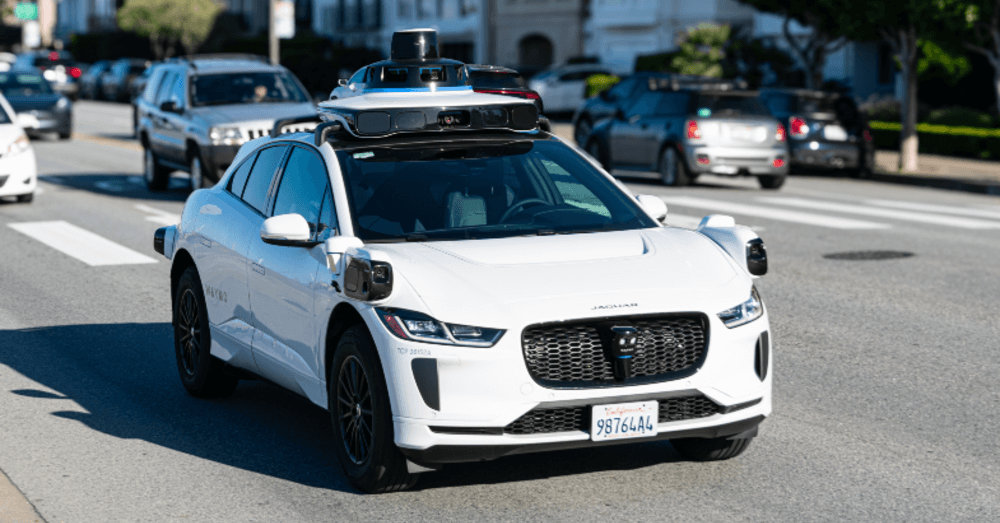
A scary moment in Phoenix ended without injuries when a Waymo robotaxi passenger jumped out of the self-driving vehicle after it came to a stop on light rail tracks. Bystander video captured the tense scene as the confused car continued driving along the rails with an approaching train nearby. The viral footage has reignited discussions about autonomous vehicle safety and their ability to handle unexpected situations.
- The incident occurred around 9 a.m. on Wednesday morning when a Valley Metro employee spotted the autonomous Waymo vehicle on the northbound light rail tracks near Southern Avenue and Central Avenue in Phoenix.
- Video of the incident has gone viral on social media, racking up over 5.5 million views on TikTok.
- The area had recent construction, and the light rail was added within the last year, which may have contributed to the confusion. The incident caused no major delays and the scene was cleared by 9:15 a.m.
What Happened on Phoenix’s Light Rail Tracks
A Waymo self-driving car was seen driving down Phoenix light rail tracks this week, forcing a passenger to flee the vehicle before it continued along the tracks near an oncoming train. Video taken by a bystander Wednesday shows the moment the self-driving car stops on the tracks just before an oncoming light rail approaches. The passenger runs out of the vehicle before the car continues to drive down the tracks near another train.
The video shows the Waymo driving down the track with its emergency lights engaged. After moving forward a few feet, the Waymo finally slows and comes to a stop. Instead of driving over the curb and back onto the road, the Waymo switches to reverse and inches closer to the railcar.
Phoenix police said they received a call about the situation but the Waymo had left before officers could arrive. They also reported that there was no disruption to light rail service.
Valley Metro’s Quick Response
A Valley Metro spokesperson said an employee who noticed the Waymo vehicle immediately notified the operations control center. Light rail operations staff responded to the scene, and Waymo was contacted. To minimize service impacts, northbound and southbound trains exchanged passengers before reversing direction to continue service. The incident caused no major delays and the scene was clear by 9:15 a.m.
Why the Phoenix Waymo Passenger Escaped a Potentially Dangerous Situation
Andrew Maynard, an emerging and transformative technology professor at Arizona State University, weighed in on why this situation occurred. “This is exactly one of those edge cases, what we call them. Something unexpected where the machine drove like a machine rather than a person,” Maynard said.
Waymo vehicles are equipped with 29 cameras and update their routes and systems weekly. In the area where the incident happened, there was construction and the light rail was added to this spot within the last year, which Maynard said could have contributed to the rail track detour.
According to Maynard, autonomous drivers like the ones found in Waymo vehicles have limitations when encountering new situations. These systems don’t possess the same fast problem-solving skills as the human brain. “Humans are really good at seeing a brand new situation and trying to work out how to get around it,” Maynard said. “Waymos don’t have that capability.”
Are Autonomous Vehicles Safe?
While incidents like this may draw skepticism about how safe these cars are, Maynard said he believes they are likely safer than typical human drivers. “These cars, in many circumstances, are safer than human drivers because they don’t have distractions, like a human driver does,” Maynard said.
Data collected by the National Highway Traffic Safety Administration shows Waymo vehicles have been involved in 1,429 accidents that were reported to the agency between July 2021 and November 2025. Of those incidents, there were 117 reported injuries and two deaths that involved a Waymo vehicle.
Waymo robotaxis, despite touting an impressive safety record, have been known to get into all kinds of bizarre traffic situations. The cars have been caught driving on the wrong side of the road, getting stuck in roundabouts, blowing through police standoffs, and ignoring stopped school buses.
Artificial intelligence systems are typically programmed to learn from past mistakes, rather than anticipating future changes. And in the case of expanding cities like Phoenix, construction zones and new layouts are known weak points for driverless GPS operating systems.
Waymo’s Next Steps After the Phoenix Incident
Maynard said, “Waymo will react very fast if they see an issue like this. They will look at the software, work out where the bugs are, where they need to update it, and they will push an update out very fast indeed.”
Maynard added that Waymo “has a challenge because no matter what they do with their system, there are always going to be unexpected circumstances where they have to learn from them.” Waymo has not made a statement about the incident.
This Phoenix incident shows the ongoing tension between rapid autonomous vehicle deployment and the unpredictable nature of real-world driving conditions. While the passenger’s quick thinking prevented any injuries, the viral video serves as a reminder that self-driving technology still has growing pains to work through.
