
 Kevin
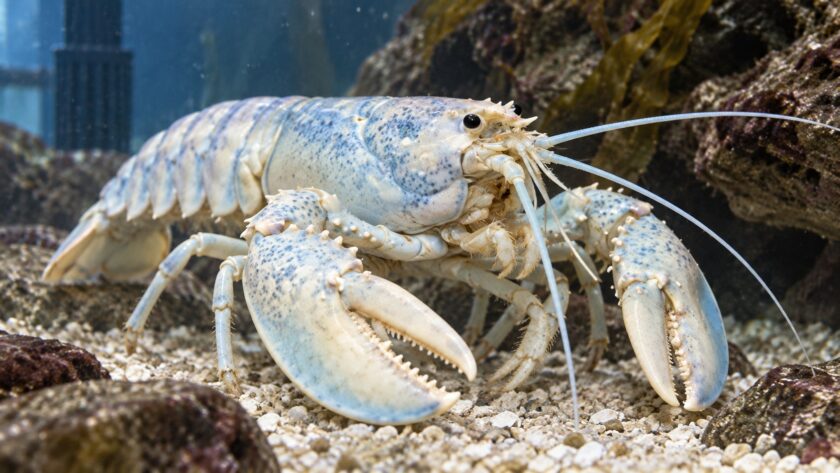
A ghost-white lobster named Casper just moved into a Maine research lab, and his odds of existing are about 1 in 100 million. Scientists think he holds a clue to one of the ocean’s quieter mysteries.
- Casper, a rare white “ghost” lobster, now lives at the University of New England after a donation from the Maine State Aquarium.
- Researchers use noninvasive genetic sampling to study why some lobsters ditch the usual brown shell for wild colors.
- He is the rarest-colored lobster to join a project that began in 2024 and already includes orange, blue, purple, and calico animals.
Meet the Ghost of Biddeford
Most lobsters wear a muddy, mottled brown shell. It keeps them hidden on the seafloor, and it is the color almost everyone pictures when they think of the animal. Casper skipped that memo entirely. He is a pale, ghostly white, and that look is so uncommon that finding one is estimated at roughly 1 in 100 million.
Casper landed at the University of New England in Biddeford, Maine, where he now lives at the Arthur P. Girard Marine Science Center. He got there by way of the Maine State Aquarium in Boothbay, which donated him to the school. The name fits. A white lobster earns the “ghost” nickname pretty quickly, and a spooky handle only makes the story more fun to tell.
Why a White Lobster Matters to Science
A rare animal is a great photo. For the researchers at UNE, though, Casper is really a walking question. He joins a project led by marine sciences professor Markus Frederich, whose team wants to understand the genetic reasons some American lobsters grow strange shell colors instead of the standard brown.
The work leans on noninvasive genetic sampling, so the animals stay healthy while the science moves forward. That approach matters when your study subjects are this scarce. You cannot exactly order a replacement ghost lobster, so keeping them safe and comfortable is part of the job.
Frederich has pointed out that animals like Casper grab attention because they are rare and beautiful, but for scientists they open the door to bigger biological questions. That is the real draw here. A single odd lobster can help explain how color works across a whole species.
A Lab Full of Colorful Characters
Casper is not alone. The project got going in 2024 after UNE received a run of unusually colored lobsters, including orange, yellow, blue, purple, calico, and split-colored animals. Split-colored ones are especially striking, with one shade on one half of the body and a completely different shade on the other.
A big piece of the research centers on an orange lobster named Peaches, who is rare in her own right at about 1 in 30 million. Peaches did something remarkable. Her offspring came out in a whole spread of colors, which handed the team a rare chance to watch how shell coloration might pass from one generation to the next. Researchers are now analyzing more than 15,000 genes from those juvenile lobsters, hunting for the switches that decide who turns brown and who turns something wilder.
Against that colorful backdrop, Casper still stands out. He is the rarest-colored lobster to join the project so far, which makes him a headline addition to an already unusual roster.
What Casper Could Teach Us Next
There is something charming about a research program that treats each lobster like an individual, right down to the names. But the goal is serious. Figuring out the genetics behind shell color can tell scientists more about how these animals develop, how traits are inherited, and how populations vary in the wild.
For now, Casper has a safe home, a steady meal, and a job to do. Every sample the team collects builds a fuller picture of why a lobster ends up brown, orange, or ghostly white. So the next time you spot a photo of a strangely colored lobster online, remember there may be a lab quietly working out exactly how nature pulled it off. Casper is one small, pale piece of that answer.
This post may contain affiliate links. Meaning a commission is given should you decide to make a purchase through these links, at no cost to you. All products shown are researched and tested to give an accurate review for you.