
 Kevin
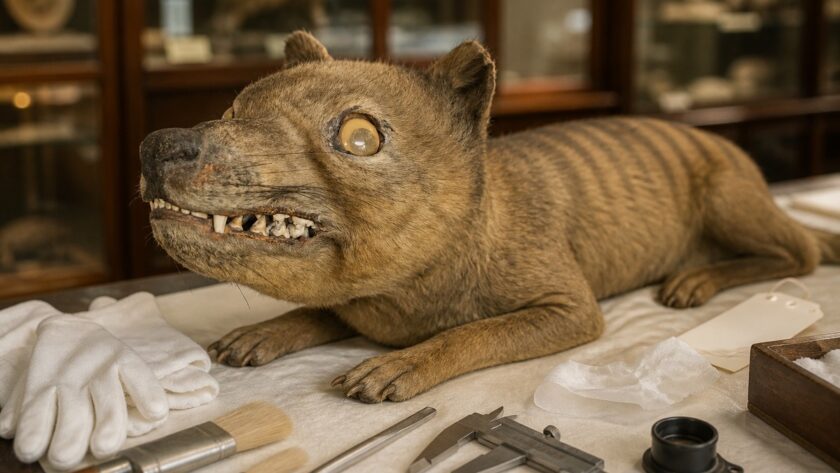
Kevin Someone paid about fifty quid for a lumpy, googly-eyed taxidermy head because it made them laugh. Months later, that same silly little curio sold for $118,000 after experts realized it was no fox at all. It was the head of a Tasmanian tiger, an animal that has been extinct since 1936.
- A cheaply stuffed “fox” head bought on a whim later sold at auction for $118,000.
- A taxidermy enthusiast identified it as a thylacine by studying its teeth.
- The mounted head may be the only one of its kind known to exist.
A Joke Purchase That Nobody Took Seriously
The story starts at a UK antiques fair, where an anonymous shopper spotted a scruffy taxidermy head sitting among the bric-a-brac. The stuffing job was rough, and someone had glued on cartoonish novelty eyes that gave the thing a permanently startled look. The buyer thought it was funny, handed over roughly the price of a takeaway dinner, and took it home as a gag.
When it eventually went to auction, expectations stayed low. The guide price landed somewhere around the cost of a nice meal out, and the reserve was set at a modest sum. Auctioneum in Bristol catalogued it as a fox mask and moved on. Not a soul in the building expected the sleepy little lot to cause a stir.
The Teeth Told the Real Story
James Cranfield, a 38-year-old taxidermy enthusiast from Essex, saw the listing and felt something was off. The proportions did not read like a fox to him. He kept turning the catalogue image over in his mind, and the more he looked, the more convinced he became that the auction house had no idea what it was holding.
So he made the trip. Cranfield set off from home at four in the morning and drove to Bristol to see the head in person before it went under the hammer. He zeroed in on the teeth, which are one of the clearest ways to separate a thylacine skull from a dog or a fox. What he found matched exactly what he had feared and hoped. The googly-eyed oddity was a genuine Tasmanian tiger head.
He described losing sleep over it, waking in a cold sweat and telling himself it could not possibly be real. For a natural history collector, this was the kind of discovery that only comes along once, if ever.
Why a Thylacine Head Is Worth a Fortune
The thylacine was a carnivorous marsupial once found across Australia and New Guinea. Mainland populations vanished thousands of years ago, but a pocket of them held on in Tasmania into modern times. European settlers in the 19th century blamed the animal for killing sheep, and government-backed bounty schemes paid people to hunt it. Between the bounties, habitat loss, and diseases carried by introduced animals, the species was pushed to the edge. The last known individual died at Hobart Zoo in 1936.
That history is exactly why this head matters. Only a handful of thylacine specimens have ever surfaced at auction, and most of them are skins that were turned into rugs. A mounted head is far rarer. Cranfield believes his find may be the only documented head of its kind in existence, calling it a true one of one.
When the two informed bidders realized they were chasing the same prize, the room went quiet and the price climbed fast. Auction staff watched the bids race from the hundreds into the thousands and then past sixty thousand pounds. The auctioneer said he had to fetch the stunned seller a chair once they heard the final number.
What Happens to the Head Now
The mounted head is being tested this week to formally confirm it is a thylacine. Cranfield has said he wants the specimen studied rather than hidden away, and he is open to sharing it with anyone serious about preserving it. He has even floated the idea of connecting with Colossal, a biotech company known for pulling DNA from old remains, in case the material could play a role in efforts to bring the species back.
Whatever comes next, the lesson is hard to miss. A forgotten relic with silly plastic eyes turned out to be one of the rarest natural history objects on the planet. It is a good reminder that the strangest thing on the table is sometimes the one worth a second look. As the auctioneer put it, he will never look at a stuffed fox the same way again.
This post may contain affiliate links. Meaning a commission is given should you decide to make a purchase through these links, at no cost to you. All products shown are researched and tested to give an accurate review for you.