
 Kevin
Kevin How many different ways will self-driving cars change our lives? How can these vehicles be held accountable when they violate traffic laws?
Atlanta police are instructed not to issue traffic citations to driverless Waymo vehicles due to court system limitations, creating separate rules for autonomous cars versus human drivers who face fines and penalties for the same violations. While this seems unfair, it’s difficult to hold non-human entities accountable for traffic violations. This creates different rules for humans and robots, but isn’t that the way it should be?
Get used to malfunctioning Waymo vehicles
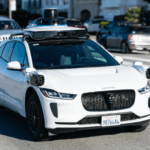
Maybe it’s not fair to focus only on Waymo vehicles, but these self-driving cars are making their way all over Atlanta. The largest city in Georgia is also one of the toughest in terms of traffic hazards, challenging driver habits, and pure volume of traffic on the roadways. Typically, Waymo vehicles have no issues, but sometimes they malfunction and get stuck in the middle of an intersection. This can create traffic problems and cause delays, for which a human driver would receive a citation with a fine and points on their license, but that’s not the case for these self-driving cars.
Companies that are developing autonomous vehicles have spent years and many miles testing on closed circuit courses, and now it’s time to be on the road. Some western cities have already had Waymo driverless vehicles and other self-driving cars on their streets, now it’s time for Atlanta to deal with these vehicles. Drivers should expect these vehicles to malfunction at some point. They operate using computers and connectivity, which we know can be troublesome at times and isn’t 100% reliable. This makes for a challenging landscape for drivers in Atlanta, but most of the time, there aren’t many problems at all.
Two sets of rules; but that’s expected
Currently, all autonomous vehicles on public roads are operated by a ride-sharing company, which makes it nearly impossible to issue a ticket. Typically, a driving violation would go to the driver or owner of the vehicle in question, but without that person present, officers have no one to give citations to. This means driverless vehicles operate under a separate set of rules, but that’s not the end of the story. Still, you would think the company operating the autonomous vehicle would be issued a ticket or citation for vehicles that violate the law.
What are officers expected to do?
When self-driving cars violate traffic laws, officers are expected to write reports providing the details of the incident and the law that was violated. This can then be used to help the company develop the AV technology to improve its technology and create much better systems that won’t violate the same laws repeatedly. While it’s different from a human driver paying fines, it’s something that can be used to improve systems as the world begins to embrace driverless vehicles on public roadways, especially in some of the busiest cities in the country.
Are driverless vehicles programmed to break the law?
You might be shocked to learn that self-driving cars can break traffic laws, but it does happen. Most of the time, it’s as simple as a malfunctioning vehicle that made a computing error and stopped in the middle of an intersection. Programmers working on autonomous vehicles are expected to program the vehicle’s systems to follow the law in every instance. As long as human drivers outnumber autonomous vehicles, these computer-driven cars need to adhere to the laws of the road and blend in with human drivers without incident, at least as much as possible.
Will driverless vehicles ever be ticketed?
While all autonomous vehicles are currently operated by ride-sharing companies, there will come a time when these vehicles are owned and operated by individuals. When this happens, it would only make sense that the owner would be responsible for any issues while the vehicle is operating on roadways. Of course, when private citizens can own these self-driving cars it’s likely many traffic laws will change to allow these vehicles the very freedom of movement that’s only restricted by human limitations.
Are we ready for self-driving cars?
Although Waymo vehicles are easy to spot, and the idea of driverless vehicles on the road can be a bit unnerving, these computer-driven cars are supposed to be safer and much less prone to accidents and traffic issues than human drivers. Humans can make mistakes based on several factors, while driverless vehicles are only limited by their programming. As programming improves and AI becomes much more robust, cars without drivers should become more common and trustworthy on roadways.
For many people, driverless vehicles don’t impact their lives in any way, and taking a ride in a Waymo vehicle could be a unique experience, but for others, these vehicles represent change that is uncertain and without proper regulation. Self-driving cars are likely to be a topic of conversation for many years as they eventually become more common and offered to private citizens to operate.
Despite current laws in Georgia being designed to penalize a human driver, there will likely be a time when self-driving cars also face penalties when breaking traffic laws, but that time isn’t here yet. Thankfully, Waymo and other companies should benefit from police reports when autonomous vehicles malfunction or break traffic laws.
This post may contain affiliate links. Meaning a commission is given should you decide to make a purchase through these links, at no cost to you. All products shown are researched and tested to give an accurate review for you.