
 Kevin
Kevin If you were hoping that our solar system’s latest interstellar guest was carrying a message from another civilization, you’re out of luck. The SETI Institute has officially wrapped its radio scan of comet 3I/Atlas and confirmed that the object is completely natural, with no signs of alien technology whatsoever.
- SETI’s radio telescope in Northern California scanned 3I/Atlas for over seven hours, analyzing nearly 74 million narrow-band radio signals.
- After filtering out interference, only about 200 signals remained, and every single one was traced back to human-made technology on Earth or in orbit.
- The comet, now almost 1 billion miles away and heading back to interstellar space, may be as old as 11 billion years.
What SETI Actually Found
The SETI Institute announced on June 3, 2026, that its extensive radio observations turned up zero evidence of extraterrestrial technology aboard the interstellar comet. Using its telescope in Northern California, the team conducted more than seven hours of observations in July 2025, shortly after 3I/Atlas was first discovered.
During those observations, the team picked up nearly 74 million narrow-band radio signals. That’s a massive haul, but the real work came in sorting through all of it. After accounting for human-made interference and signals matching the comet’s movement, only slightly more than 200 candidates remained. Every last one of them was traced back to technology on the surface of the Earth or Earth-orbiting satellites.
The results were published in the Astronomical Journal, lending peer-reviewed credibility to the findings.
Why Scientists Bothered Checking
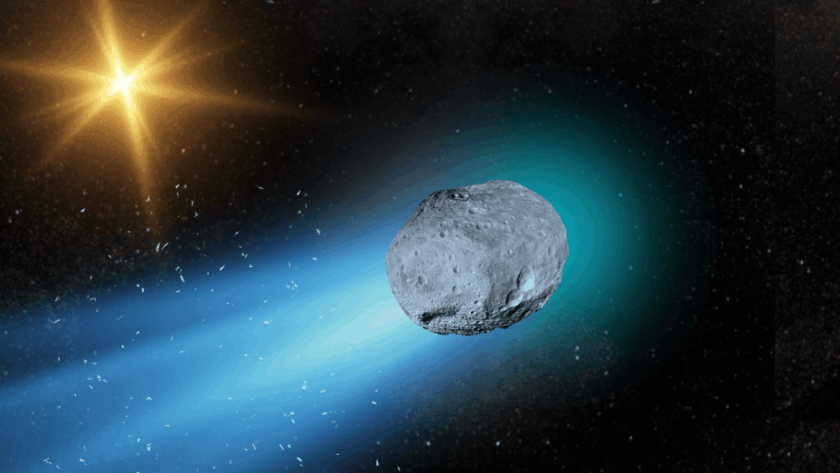
3I/Atlas was discovered last summer sweeping through our corner of the cosmos. Scientists quickly identified it as a comet that had migrated from another star, making it only the third known interstellar object to venture into the sun’s territory. All three have been deemed natural in origin.
Still, a few voices insisted, without evidence, that the object might be associated with intelligent life. That kind of speculation is hard to ignore in the public sphere, whether you’re following the story from Indianapolis, Los Angeles, or anywhere else. SETI took the responsible approach and pointed its instruments at the comet to gather actual data.
Co-author Valeria Garcia Lopez of Furman University put it well in a statement. “These results show how realistic it is to detect a signal with the technology we have today,” she said. “That is why it is important to keep searching for technosignatures, even from objects we might not expect to have signals.”
A Cosmic Visitor With a Staggering History
3I/Atlas didn’t just pass through quietly. Several NASA spacecraft observed the celestial iceball as it swung past Mars last October, venturing within 19 million miles of the red planet. The closest it ever got to Earth was in December, at a distance of about 167 million miles.
Now roughly 1 billion miles away and heading back into interstellar space, the comet is never coming back. Scientists estimate its size to be somewhere between 1,444 feet and 3.5 miles across. And here’s the truly mind-bending detail: they suspect it could be as old as 11 billion years, twice as old as the sun.
That means this chunk of ice and rock has been drifting through the galaxy since long before our solar system even existed. It wandered through our neighborhood, gave scientists a brief window to study it, and is now on its way out forever.
We Already Know Interstellar Tech Is Possible
SETI’s lead author, Sofia Sheikh, and her team raised a fascinating point in their paper. NASA’s twin Voyager spacecraft, launched in the 1970s, are currently the most distant spacecraft from Earth, drifting in the space between stars. Eventually, they’ll become interstellar objects in other star systems.
“Voyager and similar probes will eventually become interstellar objects in other stellar systems. We thus know that no extrapolation is needed for the idea of interstellar technological objects, as we have a proof by existence,” the researchers wrote.
In other words, the concept of technology floating between stars isn’t science fiction. We’ve already done it ourselves. That’s precisely why scanning objects like 3I/Atlas makes sense, even when the result comes up empty.
The Search Continues, One Comet at a Time
Finding nothing is still a finding. The SETI team’s work on 3I/Atlas demonstrates that current radio telescope technology is capable of detecting a signal if one existed. The infrastructure works. The methodology is sound. And the willingness to look, even at long-shot candidates, keeps the search honest and rigorous.
Three interstellar objects have now visited our solar system, and all three turned out to be natural. But with billions of stars potentially launching their own objects into the void, the next visitor could always be different. SETI will keep listening.
This post may contain affiliate links. Meaning a commission is given should you decide to make a purchase through these links, at no cost to you. All products shown are researched and tested to give an accurate review for you.


